Smudge-free screens in one wipe.
A CLOSER LOOK · Tech & charging
Does WaterBear Screen Cleaner Actually Work?
Does the WaterBear screen cleaner actually work? An honest look at how the stick-on pad cleans, what it isn't, and what to expect.
We earn a commission if you buy through this link. It does not change the price you pay. Check the seller for current price, compatibility, and return conditions.
The short answer
If you're wondering is WaterBear legit, the honest answer is: yes, as far as what it claims to do. WaterBear is a portable cleaning pad designed to keep screens and lenses free from smudges. The basic idea — a soft, textured material wiping away grime from glass — is a well-understood way to clean screens, glasses, and camera lenses. There's no mystery science here.
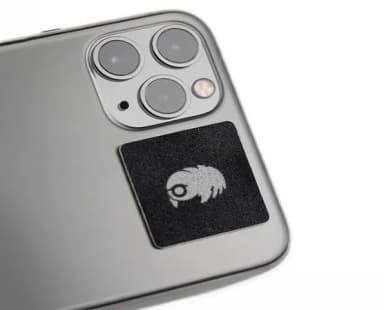
Whether it "works" for you mostly comes down to convenience. WaterBear is designed to stay attached to your device so you always have it on hand. That's the real selling point. It's a physical wiping tool, not a chemical spray or a disinfectant treatment.
If you expect a deep clean or sterilization, you'll be disappointed. If you want a quick, always-available way to wipe smudges off your phone screen, that's what this is built for.
How it's designed to work
The concept is simple. WaterBear is a small pad that sticks onto the back of your phone or camera. When your screen gets smudged, you peel it off, wipe the screen or lens, then stick it back on for next time.
The maker describes the material as NASA-inspired, using a nano-carbon blend that's designed to attract and trap grime, oils, smudges, and spills. We can't verify the NASA connection ourselves — that's the maker's own description, not a confirmed partnership. But the underlying function makes sense: certain soft, textured materials do pick up oils and fingerprints better than a shirt sleeve or a tissue.
The backing is a silicone adhesive gel. The maker says it can be stuck and peeled repeatedly without losing stickiness or leaving residue, even after regular water rinses. That's the part that matters most day to day. A cleaning pad that falls off your phone after a week, or leaves goo on your case, isn't worth much. The maker backs this claim with a lifetime warranty, saying they'll replace it for life — which suggests some confidence in the adhesive holding up.
The intended uses listed on the offer page are:
- Phone screens
- iPads
- Eyeglasses
- Camera lenses
- Computer monitors
That's a reasonable list. These are all smooth glass or coated surfaces where a soft pad can lift away fingerprints and face oils without much effort.
What WaterBear is not
This is where honest reviews earn their keep, so let's be clear about the limits.
It's not a disinfecting spray or chemical cleaner. WaterBear is a physical wiping pad. It doesn't spray anything and doesn't sanitize. If you're looking for something to disinfect your screen, this isn't that product.
It's not designed for heavy grime. Sticky spills, caked-on dirt, or deep cleaning beyond everyday smudges are outside its job description. For messes like that, you'll still need a proper cleaning routine.
It doesn't replace a cleaning cloth for large surfaces. If you want to wipe down a big TV screen, a small phone-sized pad will be awkward — unless you choose one of the larger sizes, which the maker does offer for bigger surfaces.
It's not a medical or antibacterial treatment. The offer page mentions an antimicrobial infusion in its key features list. That's a feature of the material itself, not a health claim. It doesn't mean the pad sanitizes your screen or protects you from germs. Don't buy it for that reason.
Setting these limits aside isn't a knock on the product. It just means WaterBear does one straightforward job: wiping smudges off smooth surfaces.
What actually determines whether it works for you
A few practical things will decide your experience.
Whether you actually stick it to your device and use it. Convenience is the whole point. If you toss it in a drawer, it's just a small piece of cleaning material. If it lives on the back of your phone, it's there every time your screen gets gross — which, for most people, is several times a day.
The surfaces you're cleaning. It's designed for phone screens, iPads, glasses, camera lenses, and computer monitors. If your main annoyance is a smudged phone screen or fingerprinted glasses, you're in the target zone. If you're hoping to clean something unusual, results may vary.
How much you value reusability. Some people are fine buying disposable wipes or using spray and cloth. Others like the idea of one pad that rinses clean and keeps working. If you dislike generating waste or constantly restocking wipes, a reusable pad has obvious appeal. If you don't care, the value proposition is weaker.
What to expect day to day
In practice, using WaterBear is a quick peel-wipe-stick motion. The maker describes it as a 3-step process: peel it off, wipe your screen or lens, stick it back on. It's not a multi-step cleaning ritual with sprays and microfiber cloths. It takes a few seconds.
Sizes are worth thinking about before you buy. The smaller versions suit phones and glasses. The larger ones make more sense for bigger surfaces like monitors or tablets. Picking the right size for your actual devices will matter more than anything else.
Over time, the reusability is the main draw. The maker says the pad can be rinsed with water and keep working, and the lifetime warranty means you're not stuck if the adhesive gives out. A cleaning product you buy once and use indefinitely is a different proposition than a pack of disposable wipes you burn through monthly.
Verdict
So, does WaterBear actually work? Yes — as a straightforward physical cleaning pad for everyday smudges on screens and lenses. Wiping soft material across glass to remove fingerprints and oils is a proven, simple approach, and WaterBear packages that approach in a form that travels with your device.
The main value is convenience. It's designed to stay attached to your phone or camera so it's always there when your screen gets smudged — no hunting for a cloth, no spray, no disposable wipe. For people who clean their screens multiple times a day, that convenience is the whole product.
It's not a substitute for deep cleaning or disinfecting, and it's not a medical product of any kind. But for keeping phone screens, glasses, and camera lenses clear day to day with minimal effort, it's a reasonable, low-effort tool that does what it says it does.
For the overall assessment, including who it may suit and its limitations, read our WaterBear review.
ALSO IN THESE GIFT LISTS
Sources and research scope
This is an editorial assessment of seller information, not a hands-on product test. Seller claims are not independent evidence of performance. Undated sources have not been rechecked for this revision.
- WaterBear: seller product information and current terms · not rechecked for this revision
Before ordering, record the exact model, what is included, and the delivered price with shipping, any subscription or replacement costs, and return postage. Read the return conditions for opened or used items and the deadline. A return window is not a guarantee of results or a cost-free trial, and a sale percentage is not evidence of value.